A GEO visibility score is a sample, not a measurement. It records what one prompt set returned on one run, at one moment, through one pipeline. Seven things move that number: model randomness, retrieval changes, prompt coverage, silent pipeline failures, engine updates, aggregation choices, and a genuine shift in AI visibility. Only the last one should change your plan, and only once the prompt-level detail agrees with the headline.
I have been watching one GEO visibility score for months now, and for most of that time I trusted it more than I should have. The score went 5, then 6, then 7, held at 7, and then dropped to 6. My first instinct was that something had gone wrong with my content. It had not. The run had failed, and a failed run looks identical to a collapse in visibility.
That experience is why I now treat a GEO visibility score as a starting point for investigation rather than a verdict. This post is the checklist I run before I let a number change what I do.
Why a GEO visibility score moves at all
Rankings in traditional search are relatively stable. If a page holds position 4 for a query in the morning, it usually holds it in the afternoon, because the index and the ranking model are shared and slow-moving.
AI visibility does not work that way. Every check you run asks a model to answer a prompt, and the model generates a fresh response each time. The engine retrieves sources, cuts them into chunks, and synthesises an answer. Any one of those steps can vary between runs without anything changing on your side of the fence.
This is the core difference to hold onto: a keyword rank is a stored value, and a GEO visibility score is a sample.
“Search results pages have a lot of ways for users to interact nowadays, so the old position 1 to 10 is hard to map, or to make useful for site owners.”
That is John Mueller describing a related problem in Search Console, where Gen-AI position is now tracked as a block rather than separated out per result. The measurement layer is struggling across the board, and the reporting tools are still catching up.
The second signal worth reading is how the wider industry now rates its own ranking levers. In Cyrus and Dawn Shepard’s survey of 131 SEO professionals, relevance and backlinks took the top two places while meta descriptions were rated among the least effective factors. Their footnote confirms a follow-up survey on AI ranking factors is coming, which tells you where the measurement questions are heading next.
The seven causes, in the order I check them
Start with the cheap explanations. A real visibility change is the last hypothesis, not the first, because it is the only one that demands work.
1. The model does not answer the same way twice
Modern assistants generate text with some degree of randomness built in. Ask the same question an hour apart and you can get two different answers, with different companies named, in a different order.
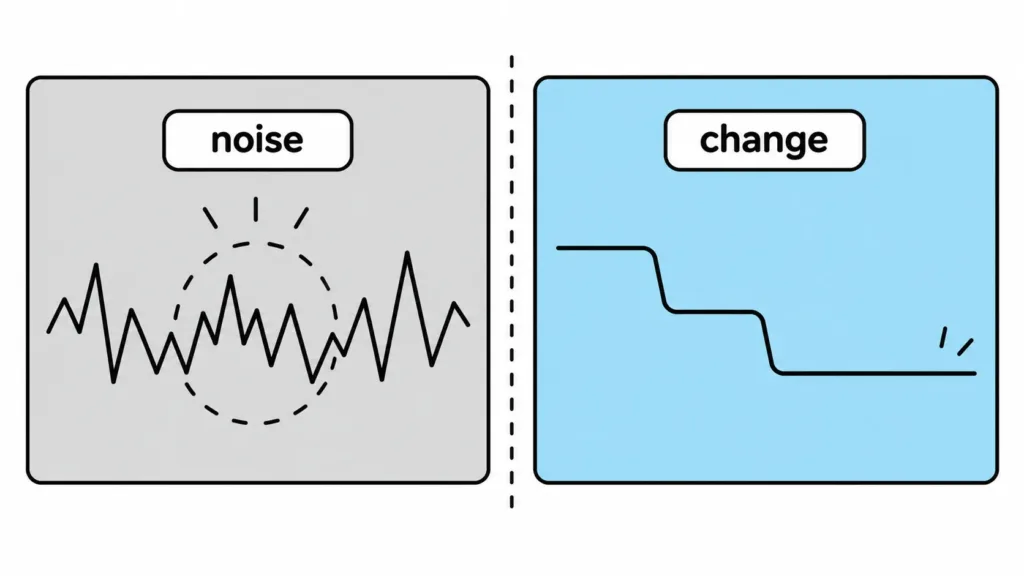
On a single run that looks like movement. Across five runs it looks like noise, which is what it is. One of the questions I rank for asks essentially this, and it turns out to be a question a lot of people have.
Quick question: how many runs before a score means anything?
At least three, and I prefer to compare a three-run average against the previous three-run average. A single run tells you what happened once.
2. Retrieval changes even when your site does not
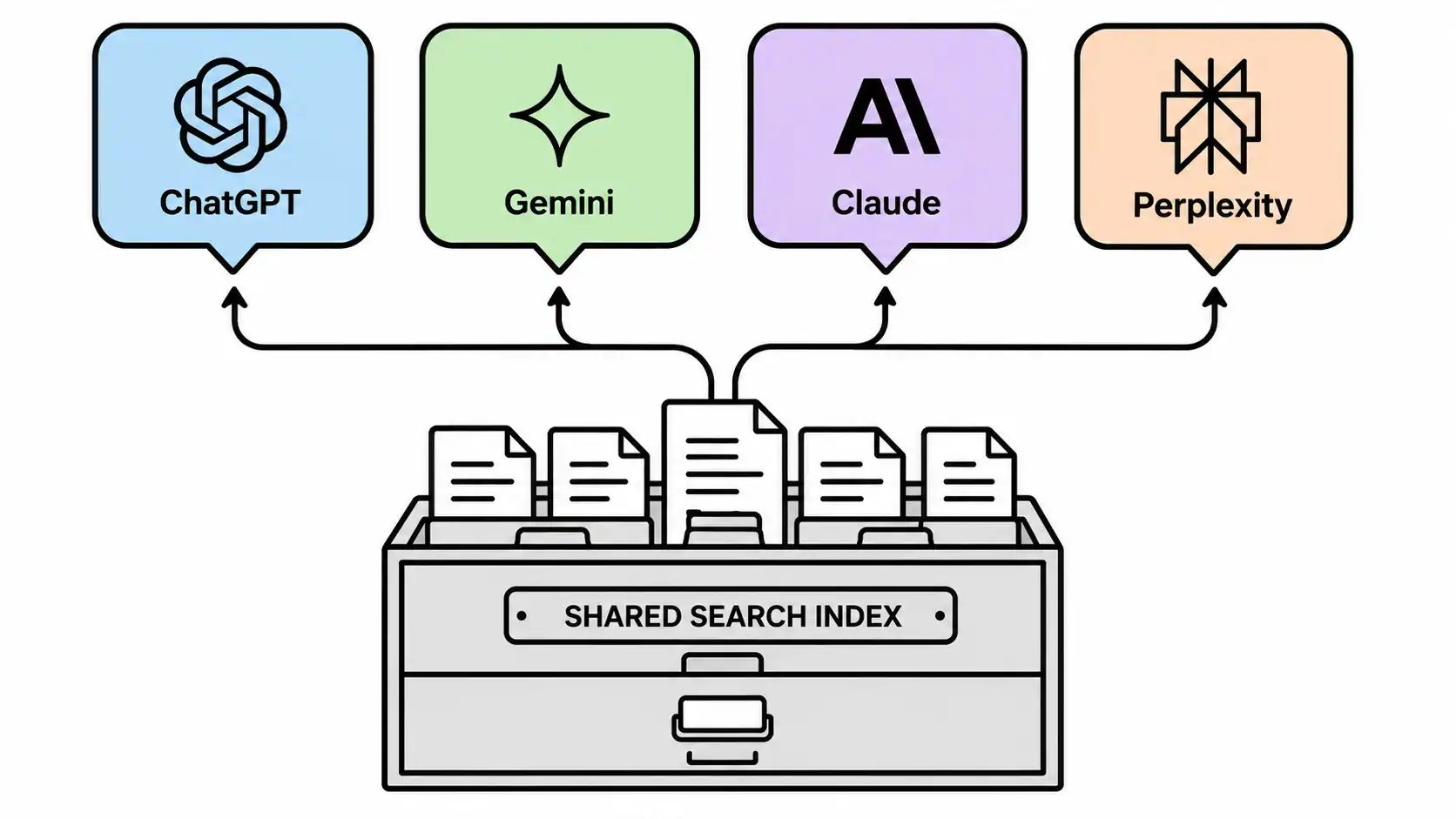
Before a model answers, it retrieves. Prompts get broken into several smaller search queries, results come back from a search index, and the engine picks which pages to read. Your page entering or leaving that retrieved set changes the score with nothing changing on your site.
This is the mechanism behind the impression flood I found in my own Search Console account recently. One page absorbed more than ten thousand impressions at an average position around 4, and produced four clicks. Nothing about the page changed. The set of queries being fired at the index changed.
3. Your prompt set decides more of your score than your visibility does
This one is uncomfortable. A GEO visibility score is an average across the prompts you chose to track. If those prompts do not cover the topics where your brand genuinely competes, you get a low score that describes your prompt list rather than your AI visibility.
I audited my own prompt set and found duplicates, broken grammar, and questions nobody would ever ask. Cleaning it up changed the score before I had published anything.
Quick question: should I add more prompts to raise the score?
Adding prompts you already win raises the average and teaches you nothing. Add prompts where you expect to lose, then fix what you find.
4. The pipeline fails quietly
The failure that fooled me. If the data provider behind the checks runs out of credits or the API returns an error, the checks come back with no brand mention. The run completes, the dashboard renders, and the score falls.
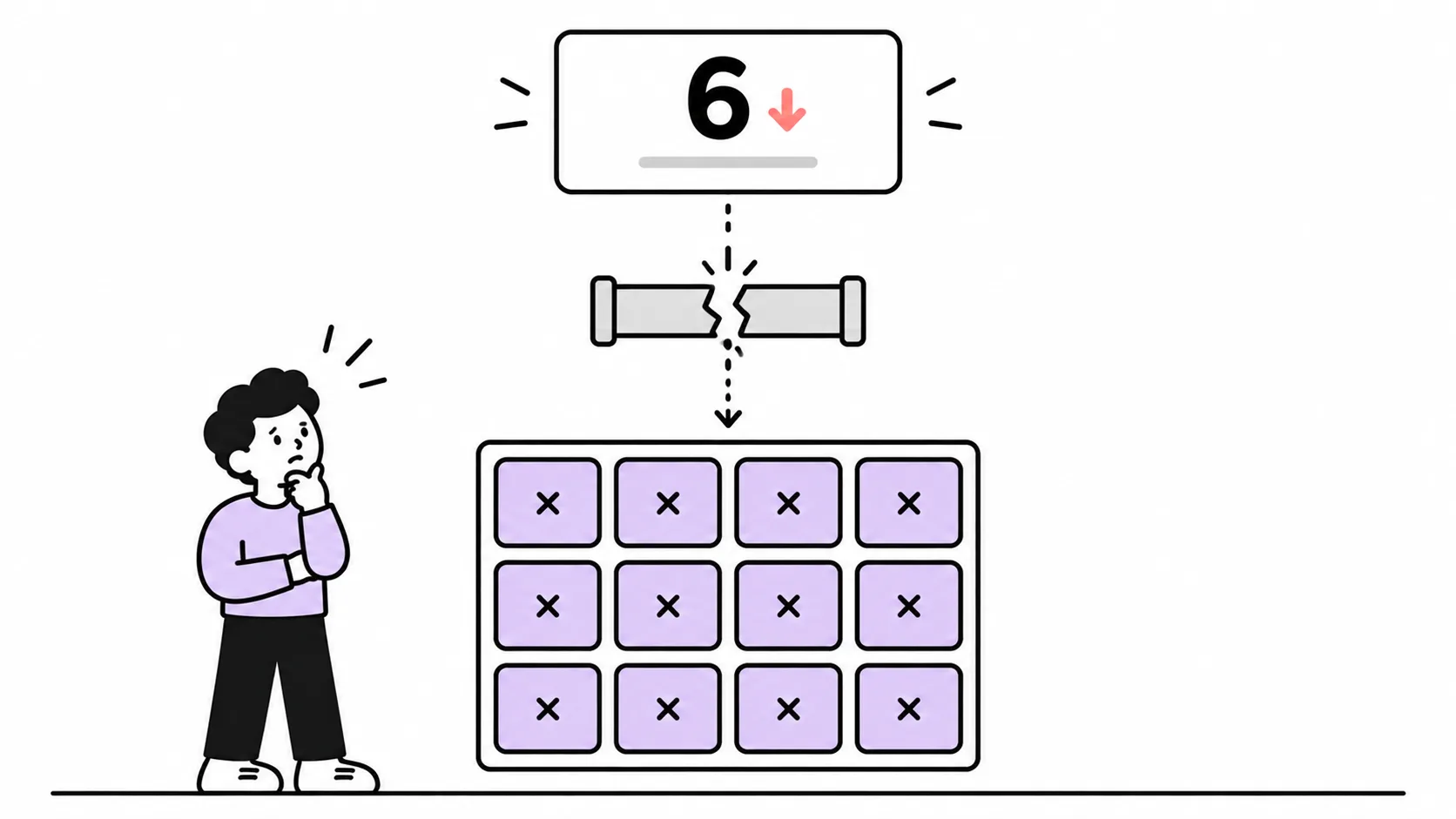
My own run showed this clearly in hindsight. The headline reported 6 out of 100 while the table underneath it marked every single prompt across every assistant as absent. Those two things cannot both be true. The headline was stale, the table was the failure, and neither was a visibility change.
5. The engine ships a new model
Model updates change answer length, citation habits, and which sources get preferred. When that happens, every brand in the category moves together.
The useful test here is comparative. If your score drops while a competitor’s score drops by a similar amount in the same week, you are looking at an engine-side change, not a problem with your content.
6. Two views of the same data disagree
Averaging across four assistants hides per-engine movement. Counting brand mentions and counting citations are different measurements that produce different numbers. Whether you report the last run or a rolling window changes the figure you quote.
Four engines, two measurement methods, and two window choices already give sixteen defensible ways to state one score. Whichever you pick, state it.
7. A real change in AI visibility
Genuine shifts do happen. A page drops out of the retrieved set after a content change, a competitor starts getting cited where you used to be, or a set of new sources enters the category and pushes everyone down.
The signature is different from the six above: the prompt-level table agrees with the headline, the move survives a re-run a few days later, and it is concentrated in the prompts where the competing content actually exists.
How to tell a measurement artifact from a real change
| What you observe | Most likely cause | What to do |
|---|---|---|
| Every prompt marked absent while the headline score is not zero | Pipeline failure | Check provider credits and run history, then re-run before reading anything |
| Score moves, your rankings and content are untouched | Retrieval variance or model randomness | Re-run three times, compare averages |
| Score is low overall but strong on your core prompts | Prompt coverage | Expand the prompt set where you expect to compete |
| All brands in the category moved together | Engine update | Wait a cycle, keep your baseline intact |
| Two dashboards report different numbers for one date | Aggregation or window choice | Pick one method, state it, stop mixing |
| Prompt table agrees with headline, survives a re-run | Real change | Investigate content, citations, and competitors |
That last row is the only one that justifies a content sprint.
The decision rule I use now
One rule has saved me more wasted effort than any other. Never act on a single run, and never interpret a headline score that disagrees with its own prompt-level table.
Two extra habits sit alongside it. I record the run count whenever I quote a score, because “6 out of 100” means something different from an average of five. And I keep a written baseline of prompt-level presence per engine, so I can compare like with like instead of reacting to whichever view I happen to open.
Challenges I ran into, and what fixed them
The score moved and I had no idea why. I spent an afternoon auditing content that turned out to be fine. What fixed it was adding the prompt-level table to the first thing I look at, before the headline number.
The prompt set had grown without anyone pruning it. Duplicates, malformed questions, and prompts for products I do not sell. Removing them took twenty minutes and changed the baseline permanently.
I almost wrote a public post about a drop that never happened. That is the one that matters. Publishing an analysis of a visibility collapse that was really a failed data pull would have cost me credibility I cannot buy back.
Off-Page AI Trust: the signals a score cannot see
A GEO visibility score measures whether your brand appears in answers. It says nothing about whether the engines trust what they find, and trust is what gets you cited when several brands are technically visible.
Three signals sit outside the score entirely. Entity consistency matters most, which means your name, role, and company described the same way on your own site, on professional networks, and in any directory that carries your profile. When a name collides with other people who share it, the engines need disambiguation, and inconsistent descriptions make that harder.
Knowledge graph presence is the second. If the engines can resolve your brand to a stable entity, they cite it with more confidence. If they cannot, they hedge.
Citation co-occurrence is the third, and the most interesting. Where your brand appears alongside the sources the engines already trust tells you which relationships are doing work. I cover the tracking side of this in how I tracked a brand across four AI engines for thirty days.
What I track alongside the score
The headline number stays on the dashboard. These are the four things I actually read.
- Prompt-level presence per engine, over a rolling window, with the run count noted
- The pattern of movement: did one engine move or all four
- Whether the score change survived a re-run
- Citation checks on the few prompts where the brand should be winning and is not
If you want the mechanics underneath all of this, how GEO works under the hood explains query fan-out, retrieval and chunking, and the technical guide to how AI search engines work covers the index and pipeline side in more depth.
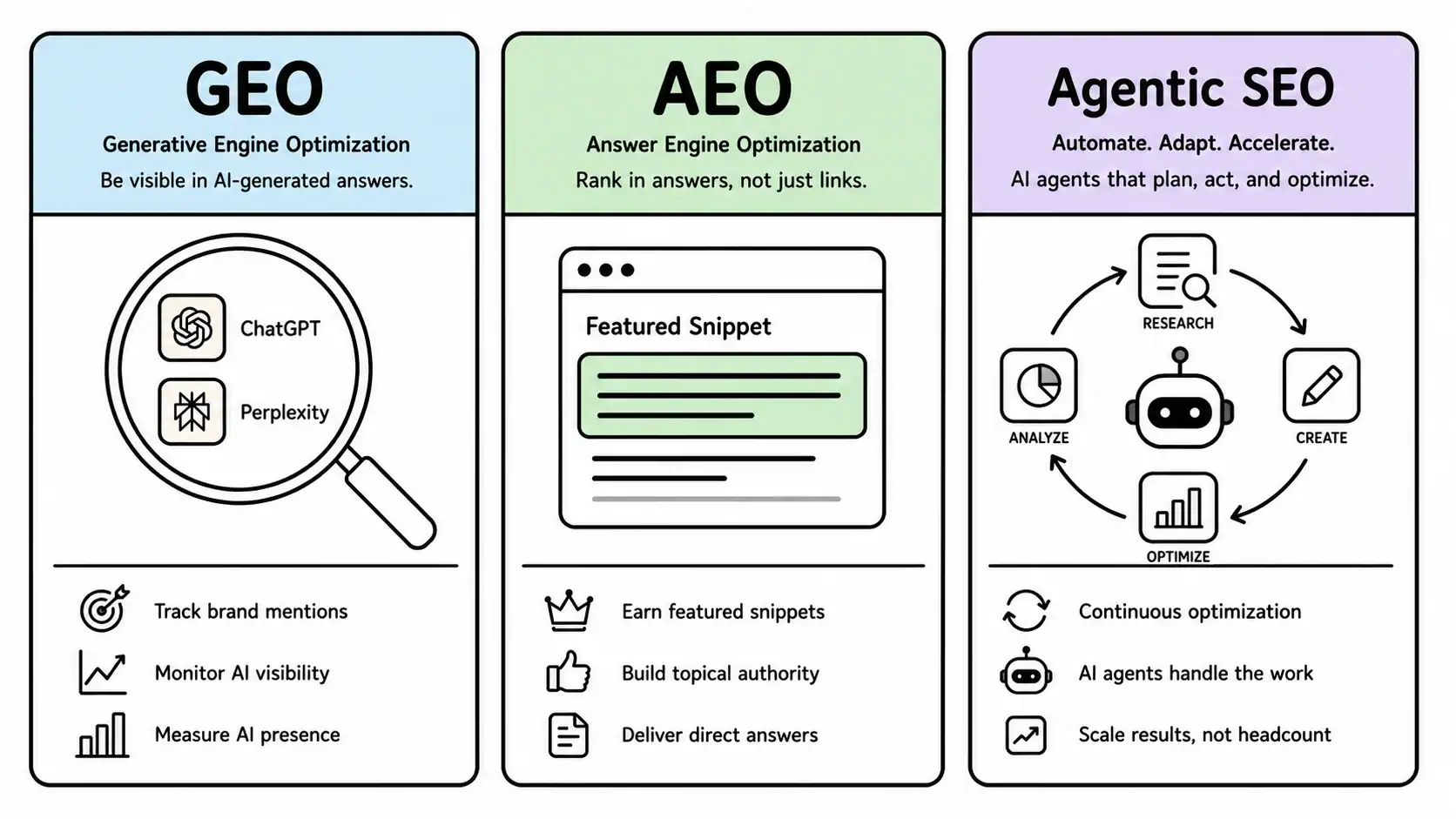
For the process context, GEO tracking, AEO and agentic SEO are three layers of one system, and I wrote up the distinction in the complete agentic SEO guide.
Frequently Asked Questions
Why does the same prompt give a different answer each time?
Models generate responses with some randomness, and the retrieval step before generation can return different sources on different runs. Both introduce variation that has nothing to do with your content. Treating any single run as a measurement is the most common mistake I see.
How often should I run a GEO visibility check?
Weekly is enough for most brands, and more often than that mostly adds noise to your baseline. If you are actively fixing something, run three checks close together and compare averages rather than individual results.
Can a GEO visibility score go down without losing any rankings?
Yes, and it happens often. A provider failure, a prompt set change, or an engine update can all move the score while your traditional rankings and your content stay exactly where they were.
Should I panic when my GEO visibility score drops?
No. Check for a pipeline failure first, then re-run before drawing any conclusion. If the drop survives a re-run of three checks and the prompt-level table agrees with the headline, you have something worth investigating.
Is a GEO visibility score comparable between tools?
Rarely. Prompt sets, engine coverage, measurement methods and reporting windows all differ, so two tools measuring the same brand can report very different numbers. Compare a tool against its own history, not against a competitor’s dashboard.
What is a good GEO visibility score?
There is no universal good number, because the score is an average over your prompt list. A rising trend on the prompts where your brand should compete is the meaningful signal. A high number on prompts you already win means nothing.
Does fixing technical SEO raise AI visibility?
It helps the retrieval side, which is one input among several. Pages that are slow or hard to crawl are less likely to be fetched and quoted, so there is a connection. It is not sufficient on its own, and I treat it as infrastructure rather than a visibility lever.
Conclusion
A GEO visibility score is worth watching, as long as you remember it is a sample taken through a pipeline that can fail. Six of the seven causes I listed here are measurement problems, and they will be the explanation far more often than a real change in AI visibility.
The practical habit that matters is the order you check things. Look for a failed run first, re-run before interpreting, and require the prompt-level detail to agree with the headline before you touch your content.
I built my own tracking loop on top of visibility.so, where the AI visibility runs, the prompt set and the reporting all live in one place alongside the rest of the SEO work. If you are running this by hand across spreadsheets and four different chat windows, there is a better way to structure agentic SEO services than doing it manually every week.