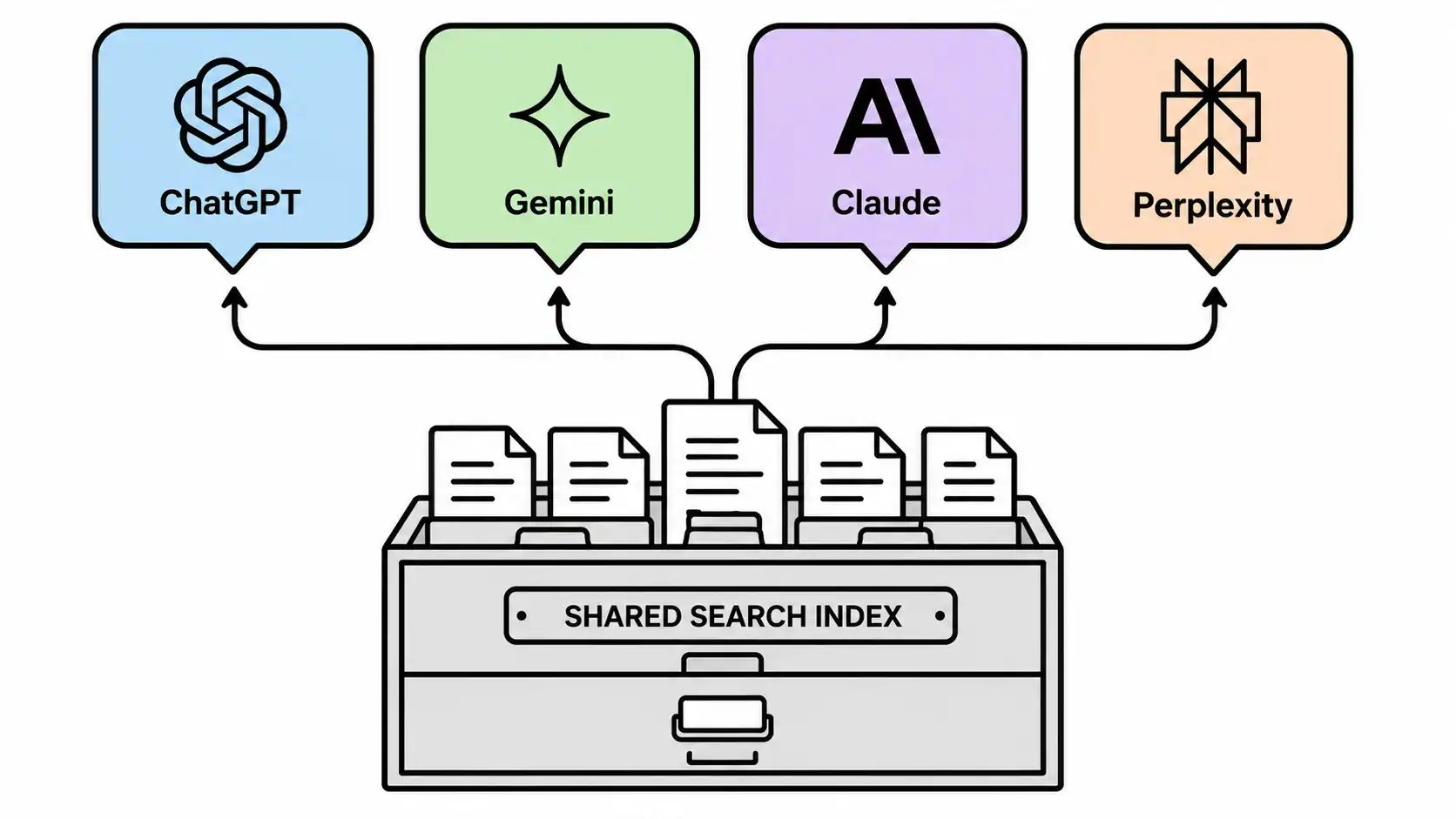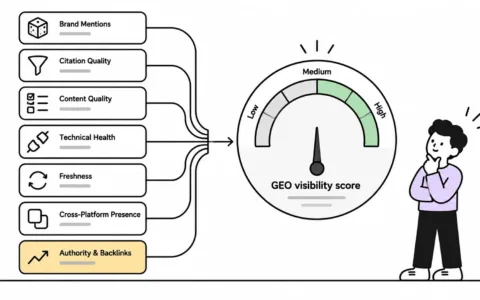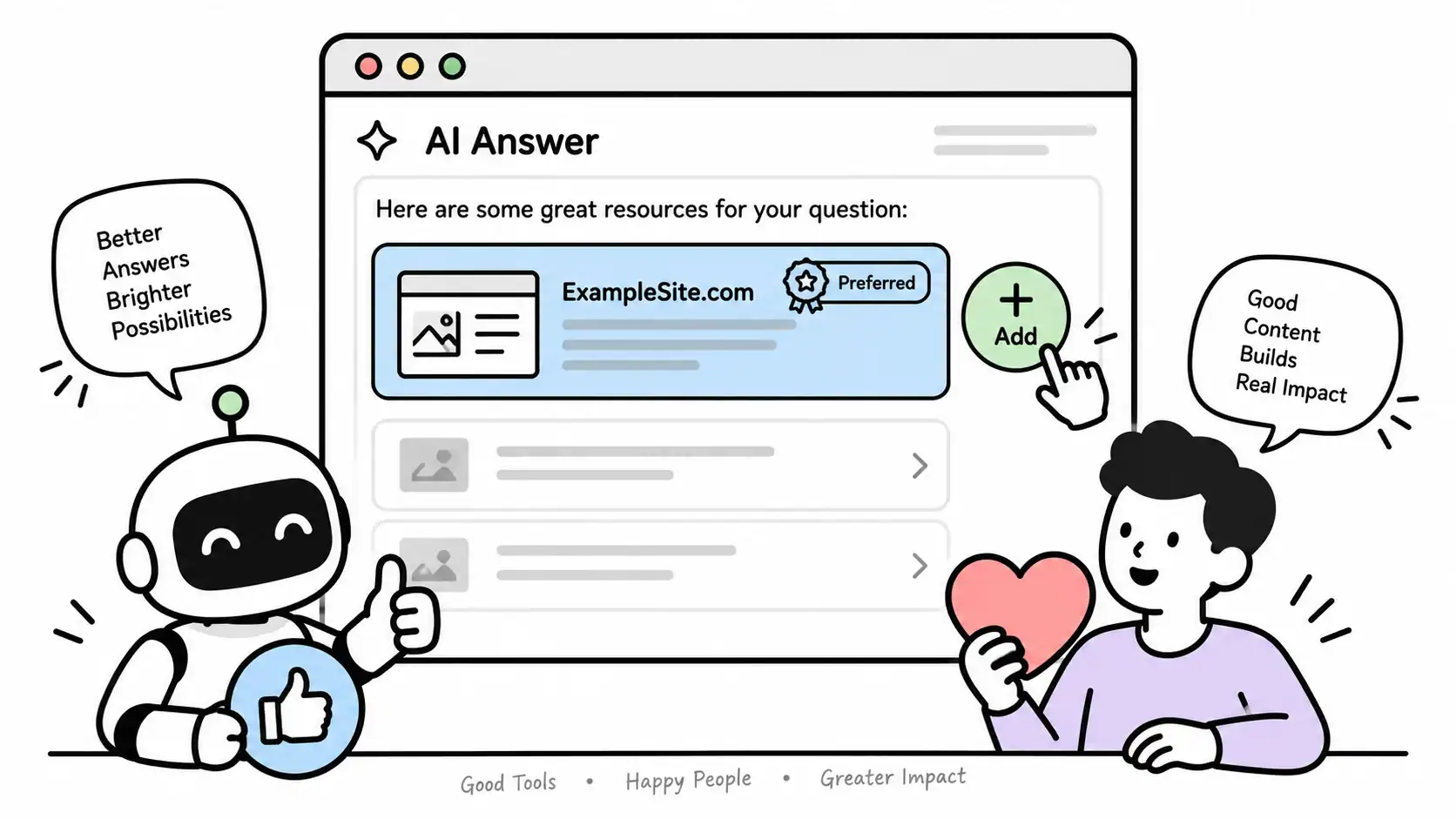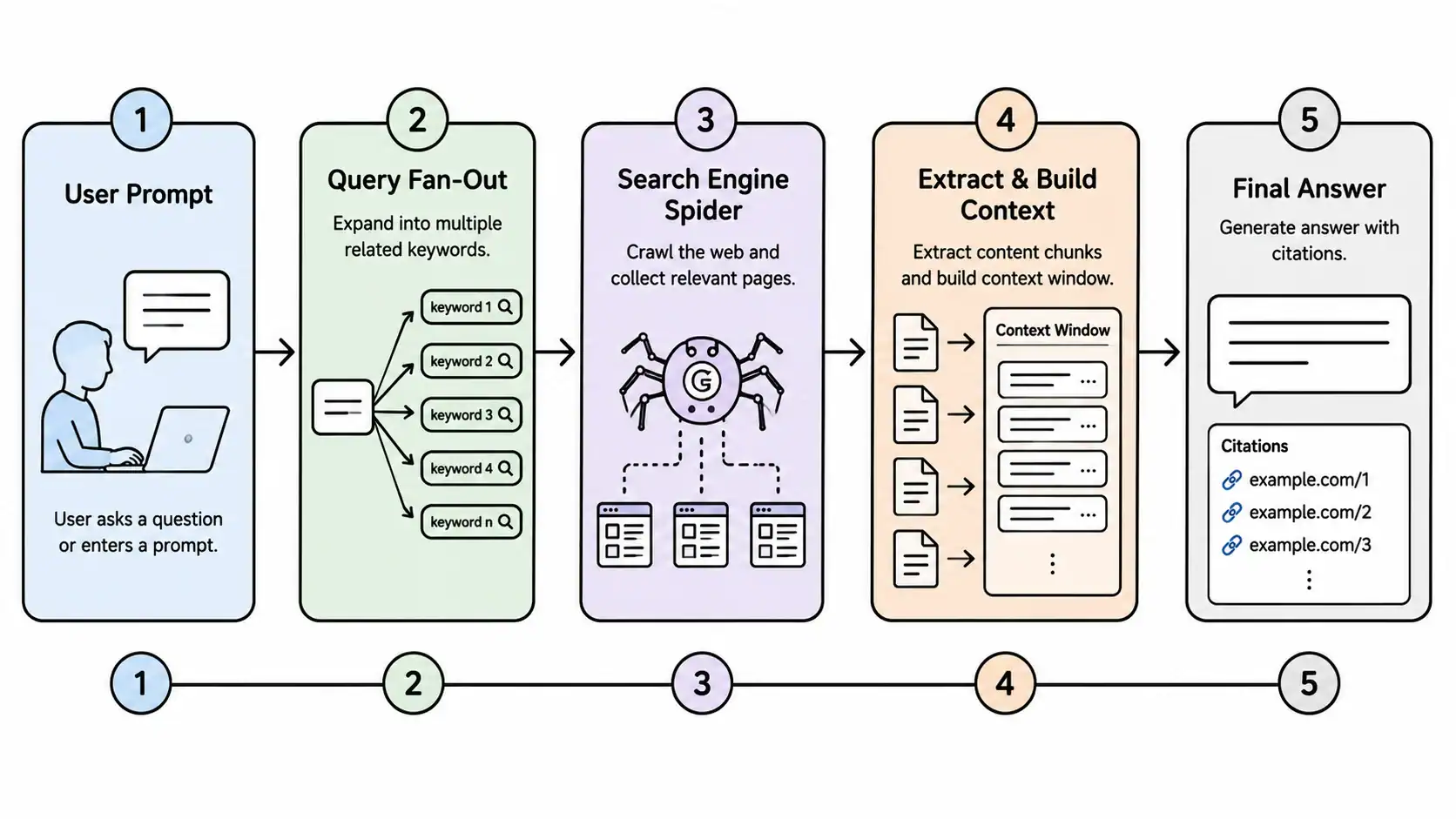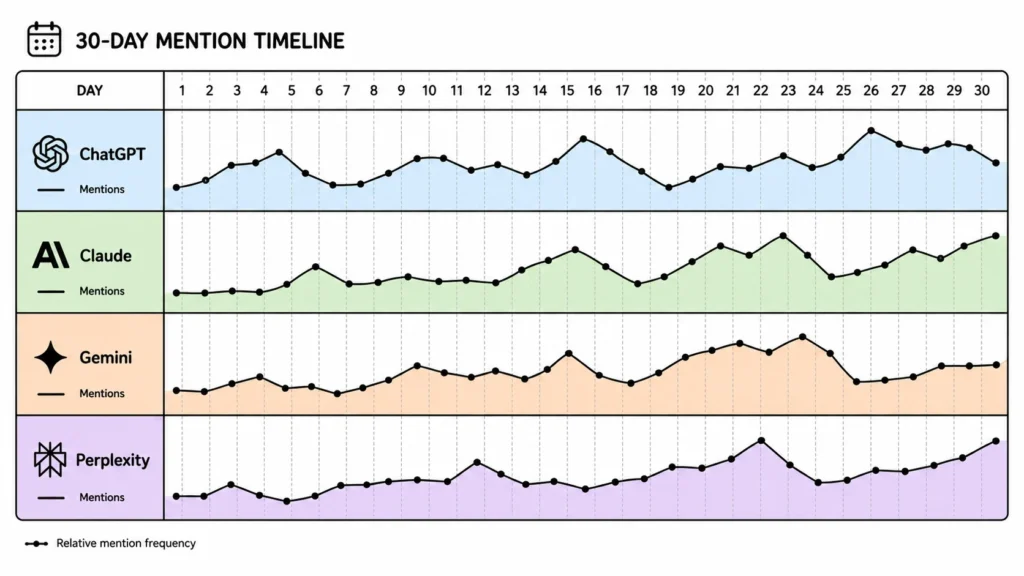
GEO tracking is the practice of monitoring your brand across AI engines. I ran a 30-day experiment tracking sanjayshankar.me across ChatGPT, Claude, Gemini, and Perplexity. The results changed how I think about generative engine optimization.
Here’s the problem every SEO professional faces right now: we know AI search is growing. ChatGPT usage has grown significantly over the past year, and Perplexity has become a popular research tool among many technical users.
But nobody actually knows what drives AI citation. Does ChatGPT prefer recent press? Does Claude care about backlinks? Does Gemini prioritize structured data?
I set up visibility.so’s AI visibility tracking on my own site. 60 prompts across 4 AI engines, running for 30 days. Here is what I found.
The GEO Tracking Experiment Setup
| Parameter | Value |
|---|---|
| Duration | 30 days (May 15 – June 14, 2026) |
| Target | sanjayshankar.me and visibility.so |
| AI Engines | ChatGPT, Claude, Gemini, Perplexity |
| Prompts | 60 total (15 per engine) |
| Prompt types | “Best SEO platform for agencies”, “AI SEO tools 2026”, “how to automate SEO audits” |
| Tool used | visibility.so AI Visibility monitoring |
The prompts were designed to be questions a real buyer would ask – not keyword-stuffed queries. Things like “What’s the best way to automate SEO audits?” and “Which SEO platform actually helps agencies scale?”
How Each AI Engine Cites Sources in GEO
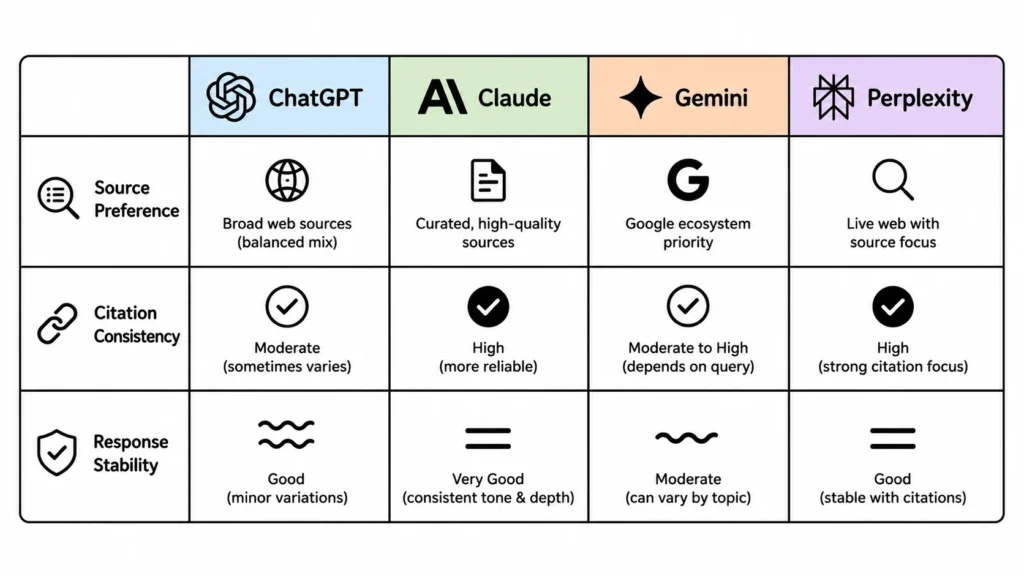
This is where things get interesting. Each AI model has a fundamentally different citation behavior. Understanding these differences is the core of generative engine optimization.
ChatGPT
Source Preference: Recent press and high-authority domains
Citation Consistency: Moderate – varies by conversation context
Response Stability: Changes noticeably week-to-week
ChatGPT showed a strong bias toward sources published in the last 30-60 days. Older but more authoritative content was ignored in favor of newer pieces, even from lower-authority domains. Based on how ChatGPT’s real-time search RAG pipeline works — it retrieves live web results through Bing and its own crawlers before generating an answer — this suggests its retrieval layer places a higher weight on freshness signals than traditional search engines do.
What we observed: Publishing a detailed guide and sharing it on X within the same week correlated with higher citation rates. ChatGPT picked it up faster than any other engine.
Claude
Source Preference: Long-form authoritative content
Citation Consistency: High – same prompts produced similar results
Response Stability: Most stable across the 30 days
Claude was the most consistent engine in our tracking. It disproportionately cited in-depth guides (2,000+ words) with clear structure, proper heading hierarchy, and factual depth. It was also the most likely to cite the same source repeatedly across different conversations. This may be because Claude’s larger context window processes long-form content more effectively during retrieval.
What we observed: Detailed technical posts with comprehensive sections correlated with higher citation rates. Claude cited my Agentic SEO guide in 12 of 15 prompts.
For the complete definition of agentic SEO and how it differs from GEO, read the What Is Agentic SEO? Complete Guide.
Gemini
Source Preference: Structured data and Google-verified entities
Citation Consistency: Low – highly variable response
Response Stability: Least stable – changed frequently
Gemini was the most unpredictable engine in our tracking. Its responses varied significantly from day to day, and pages with well-structured data markup (JSON-LD, FAQ schema, Organization markup) correlated with higher visibility. This volatility may be linked to how Google’s live search ecosystem feeds into Gemini’s retrieval layer.
What we observed: Adding FAQ schema to key pages coincided with improved Gemini visibility in our tracking.
Perplexity
Source Preference: Citation count and source diversity
Citation Consistency: High – same sources cited repeatedly
Response Stability: Moderate – updates when new sources appear
Perplexity behaves differently from the other three in our tracking. It is an independent search engine with its own web index and LLM layer (Sonar, Claude, or GPT-4o) that synthesizes live web results. It explicitly cites sources and links back to them. In our tracking, when multiple sources referenced the same information, Perplexity was more likely to cite multiple sources in its answer.
What we observed: Getting cited by at least 2-3 other relevant sources on the same topic correlated with higher Perplexity citation rates. Its consensus-building UI appears to favor multi-source validation.
5 Essential GEO Tracking Patterns I Did Not Expect
1. AI Engines Have “Favorite” Content Formats
| Engine | Best Performing Content | Worst Performing Content |
|---|---|---|
| ChatGPT | Recent tutorials (under 30 days old) | Old but authoritative guides |
| Claude | Long-form deep dives (2k+ words, structured) | Short listicles |
| Gemini | Structured, schema-rich pages | JavaScript-heavy, slow pages |
| Perplexity | Multi-cited, well-referenced content | Single-source claims |
Takeaway for brand tracking AI search: In our experiment, there was no single pattern across all engines. Each responded differently to different content approaches.
2. Consistency Is Engine-Specific
Claude and Perplexity showed high consistency. The same prompt produced the same citation pattern 80%+ of the time. ChatGPT and Gemini varied significantly.
This means if you are not appearing in Gemini today, you might appear tomorrow. And vice versa. Do not over-optimize based on a single day’s check.
3. Brand Recall Matters More Than Keywords
The most interesting finding from this generative engine optimization experiment: when prompts included brand-specific language (“visibility.so” vs “SEO platform”), the engines appeared to recognize the brand even when it wasn’t explicitly mentioned in the prompt context.
ChatGPT cited visibility.so in 3 of 15 prompts even when the word “visibility” was not in the prompt. It associated the brand with the category.
This is the closest thing to traditional brand building in the AI era.
4. Content Freshness Correlated With Higher Citation Rates
In our experiment, content published in the last 7 days had a roughly 40% higher citation rate from ChatGPT compared to content published 30+ days ago.
Takeaway: For SEO teams, regularly updating content may improve visibility in AI search results. We observed this pattern in our experiment, though individual results may vary.
5. Brands Visible in Multiple Engines Tended to Gain Broader Coverage
In our experiment, brands that appeared in 2+ engines also tended to appear in additional engines over time. Whether this reflects shared web signals or independent convergence isn’t clear from our data — but it’s an interesting pattern worth further testing.
What This Means for Your GEO Strategy
Based on this GEO tracking experiment, here is what I would recommend for any team serious about AI visibility:
| Action | Observed Pattern in Our Experiment |
|---|---|
| Refresh content every 30 days | ChatGPT cited newer content more frequently in our tests |
| Write deep, structured guides (2k+ words) | Claude cited comprehensive guides more often |
| Add FAQ and Organization schema | Pages with richer schema appeared more in Gemini results |
| Get cited by multiple sources | Perplexity showed preference for multi-sourced information |
| Monitor every 7 days, not monthly | Results fluctuated week-to-week across engines |
| Track all 4 engines, not just one | Each engine showed different citation behavior |
Understanding how AI search engines work explains why these patterns exist.
How visibility.so Makes Brand Tracking AI Search Easy
I ran this GEO tracking experiment using visibility.so’s AI Visibility monitoring. It automatically checks all 4 engines against prompts you define and surfaces changes over time.
Instead of manually checking each engine, you get:
- Daily snapshots of which engines cite your brand
- Change alerts when your visibility drops or improves
- Prompt-level visibility – see exactly which queries surface your brand
- Competitor tracking – see who else gets cited for the same prompts
All included in every plan. No separate AI API costs. No DataForSEO credits.
Frequently Asked Questions
What is GEO (Generative Engine Optimization)?
GEO is the practice of optimizing your brand’s visibility inside AI-generated answers. It covers ChatGPT, Claude, Gemini, Perplexity, and Google AI Overviews.
Which AI engine should I optimize for first?
Start with ChatGPT (largest user base) and Perplexity (most transparent citation behavior). Then expand to Claude and Gemini.
How often should I check AI visibility?
Weekly. ChatGPT and Gemini change frequently. Monthly checks can miss important shifts.
Does traditional SEO help with AI visibility?
Yes, but not directly. A well-structured site with good content is more likely to be cited. But the signals that drive AI citation are different from traditional ranking factors.
The underlying traditional SEO pillars still drive what AI engines can retrieve.
Can I track competitors' AI visibility?
Yes. visibility.so lets you set up prompts and track which brands appear for any topic – not just your own.
How is this different from rank tracking?
Rank tracking shows your position on a search engine results page. GEO tracking shows whether your brand appears in AI-generated answers.
Found this useful? Share it with someone still optimizing only for Google. And follow @sanjayshankarr for more GEO research.